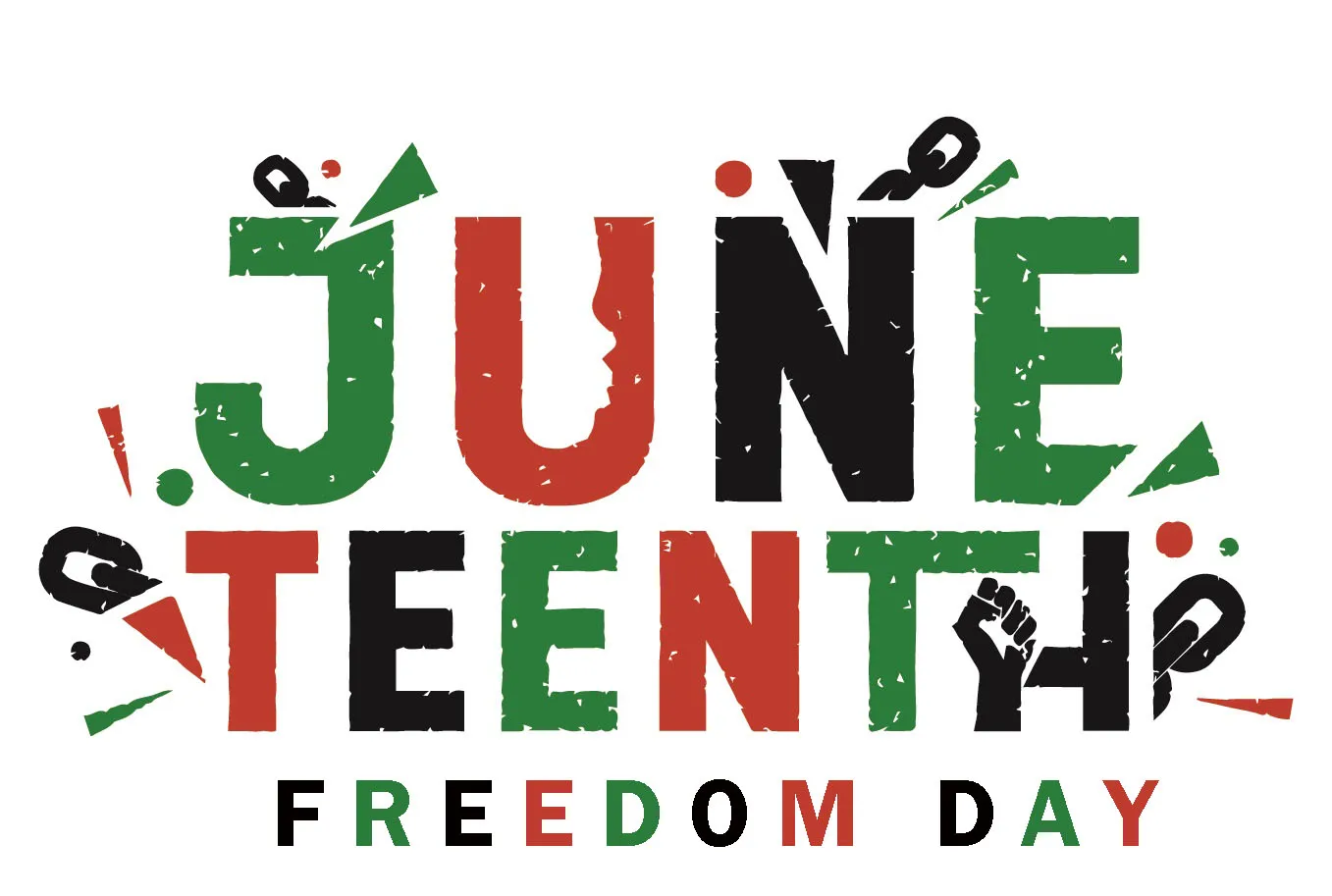
A key American historical event has finally gotten federal recognition: June 19, 1865—the day all enslaved people living in the United States were officially granted freedom. On June 17, 2021, President Joe Biden signed a bill into law the day known as Juneteenth a national holiday.
“Great nations don’t ignore their most painful moments. They don’t ignore those moments in the past. They embrace them,” Biden said at the White House signing. “Great nations don’t walk away. We come to terms with the mistakes we made. And in remembering those moments, we begin to heal and grow stronger.”
Many of us in the United States have grown up with the idea that the Fourth of July is about as American as you can get. People come out in droves to celebrate the holiday, which honors the adoption of the Declaration of Independence in 1776, with festive cookouts, fireworks, and a smattering of red, white, and blue desserts. The national observance of Juneteenth provides a fuller, and more accurate, portrait of America’s history beyond Fourth of July celebrations.
In 2020, in light of the national resurgence of the Black Lives Matter movement and amid the police killings of Ahmaud Arbery, George Floyd, and Breonna Taylor, Juneteenth took on an even bigger meaning. Americans—many for the first time—were seeking to honor Black lives lost in any way that they could in order to remember and acknowledge the historical struggles of the community.
“The stakes are a little different,” Mark Anthony Neal, a Duke University African American studies professor told The New York Times in June 2020. “Many African Africans, Black Americans, feel as though this is the first time in a long time that they have been heard in a way across the culture… It’s an opportunity for folks to kind of catch their breath about what has been this incredible pace of change and shifting that we’ve seen.”

Juneteenth, also known as Emancipation Day, takes place annually on June 19. The holiday is a combination of the words “June” and “nineteenth.” On January 1, 1863, ahead of the third year of the Civil War, President Abraham Lincoln signed the Emancipation Proclamation, which declared all enslaved people in the rebellious Confederate states—Alabama, Florida, Georgia, Louisiana, Mississippi, South Carolina, Texas, Arkansas, North Carolina, Tennessee, and Virginia—were free. But Lincoln’s executive order did not fully abolish slavery in the U.S., as it didn’t apply to those held as property in bordering states who were loyal to the Union.
Despite the proclamation, in Texas, slavery was largely unaffected. The confederates considered the state a safe space for slaveholders, as it remained generally unoccupied by Union Army soldiers during the war—mainly because it was one of the farthest away from the border between the Union and the Confederacy, a.k.a, the frontlines of the Civil War.
But on June 19, 1865, two and a half years after the Emancipation Proclamation was signed, and just two months after Confederate General Robert E. Lee surrendered and the Union Army winning the war, Major General Gordon Granger arrived in Galveston to take control. He issued General Order No. 3: informing enslaved people that they were free and that the Civil War was officially over. This is why we celebrate Juneteenth, because it honors the day ALL of the enslaved were made aware of the Emancipation Proclamation and were officially legally released from their bonds.
Prior to the new law signed by President Biden, Washington, D.C. and 48 states had passed legislation to recognize Juneteenth, though only a few states made it a paid holiday where all workers are given the day off, like July 4th.
Today many people of color continue to be victims of unnecessary and unprovoked violence. Our children are under attack, our elderly are under attack, our education system, house of worship, grocery stores, restaurants, highway, parks, and government buildings are not safe places for American citizens. Please take the time to be reflective about why we celebrate Juneteenth and the true meaning of a world where all people are free and treated fairly not by the color of their skin, but by the content of their character. Because Juneteenth is more than just a day off.
-Ethel Everett
DCF Regional Vice President, SEIU 509
Chair, SEIU 509 Racial Justice Taskforce
About the Racial Justice Taskforce
In 2017, the SEIU Local 509 Racial Justice Task Force came together, and in 2018, was formally established with a resolution that was adopted and passed by the Local 509 Joint Executive Board: To Win Economic Justice for Working People, We Must Win Racial Justice for All. Local 509’s resolution also spoke specifically to the racist attacks on people of color, working with community allies, education, organizing and mobilizing, and the mantra of “an injury to one is an injury to all.”
Spearheaded by our Chair, Ethel Everett, the Racial Justice Task Force focuses on solutions and opportunities for 509 member members to topple racial injustice at our worksites, in our communities, and beyond. We welcome you to join with members, staff and leaders in building a broad-based movement for racial justice.